
Launching a SaaS Startup’s Authority Engine: Website, PR & Automation
- Client: Fast-Growth B2B SaaS Platform
- Industry: Technology & SaaS
- Problem: Confusing brand & manual support
- Solution: Authority-focused website, PR, SEO & AI automation
- Result: Scalable pipeline, faster onboarding, fewer tickets
Core Problem
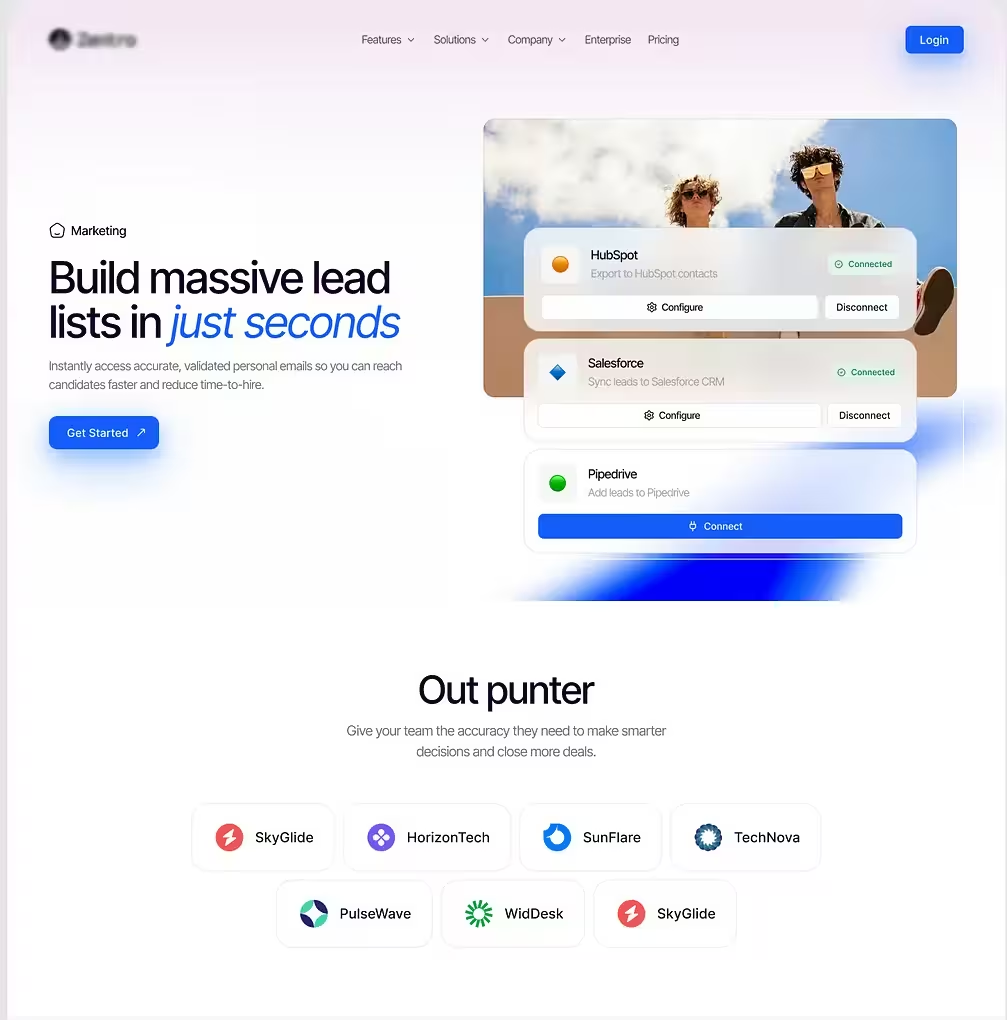
The startup had a solid product but looked and felt like an early MVP—no authority, low trust, confusing onboarding, and manual support
Transformation
The client shifted from “unknown SaaS tool” to a credible B2B platform with an always-on authority engine, clear onboarding, and automated customer support
Services Delivered
Client Context
- Seed-funded B2B SaaS platform targeting mid-market operations and revenue leaders
- Complex product with multi-stakeholder decisions (Ops, Finance, IT, Leadership)
- Founder-led sales with no real marketing engine in place
- Competing against established, well-funded incumbents with strong brand recognition
Core Challenges
- Website looked like an MVP, not an authority platform
- Generic design, unclear messaging, low credibility
- No clear narrative for “Who is this for?” and “Why now?”
- No authority signals
- No press coverage, no media features, no case studies
- Prospects felt they were “taking a risk” with a new, unknown vendor
- Onboarding and product clarity were weak
- Users didn’t understand the product quickly
- Sales calls turned into long “product walkthroughs” instead of strategic discussions
- No SEO foundation
- Didn’t rank for their main problem/solution keywords
- Depended almost entirely on direct outreach and personal networks
- Manual, repetitive customer support
- Support team constantly answering the same “How do I…?” questions
- No knowledge base, no scalable support flow, high load on a small team
In short: strong product, weak perception. No system for authority, no system for onboarding, and no system for support
Strategy & Solution
We designed and deployed an Authority Engine built around 5 strategic pillars.
Pillar 1 — Authority-First Website & Positioning
What we did
- Rebuilt the marketing site with UI/UX focused on clarity and conversion, not just aesthetics
- Defined clear messaging architecture: target ICPs, pain points, outcomes, and proof
- Structured pages for buyer journeys: Home → Problem → Solution → Proof → Action
- Added above-the-fold social proof areas, objection-handling sections, and clear CTAs
Why it mattered
- The website is the first credibility test for a B2B SaaS product
- Without clear positioning and professional design, everything else (PR, traffic, outreach) underperforms
How it solved key challenges
- Turned a confusing MVP-style site into a trust-building sales asset
- Helped visitors quickly understand: “Is this for me?” and “Can I trust them?”
Pillar 2 — SEO Foundations & Technical Optimization
What we did
- Ran a technical SEO audit and fixed core issues (crawlability, speed, structure, on-page basics)
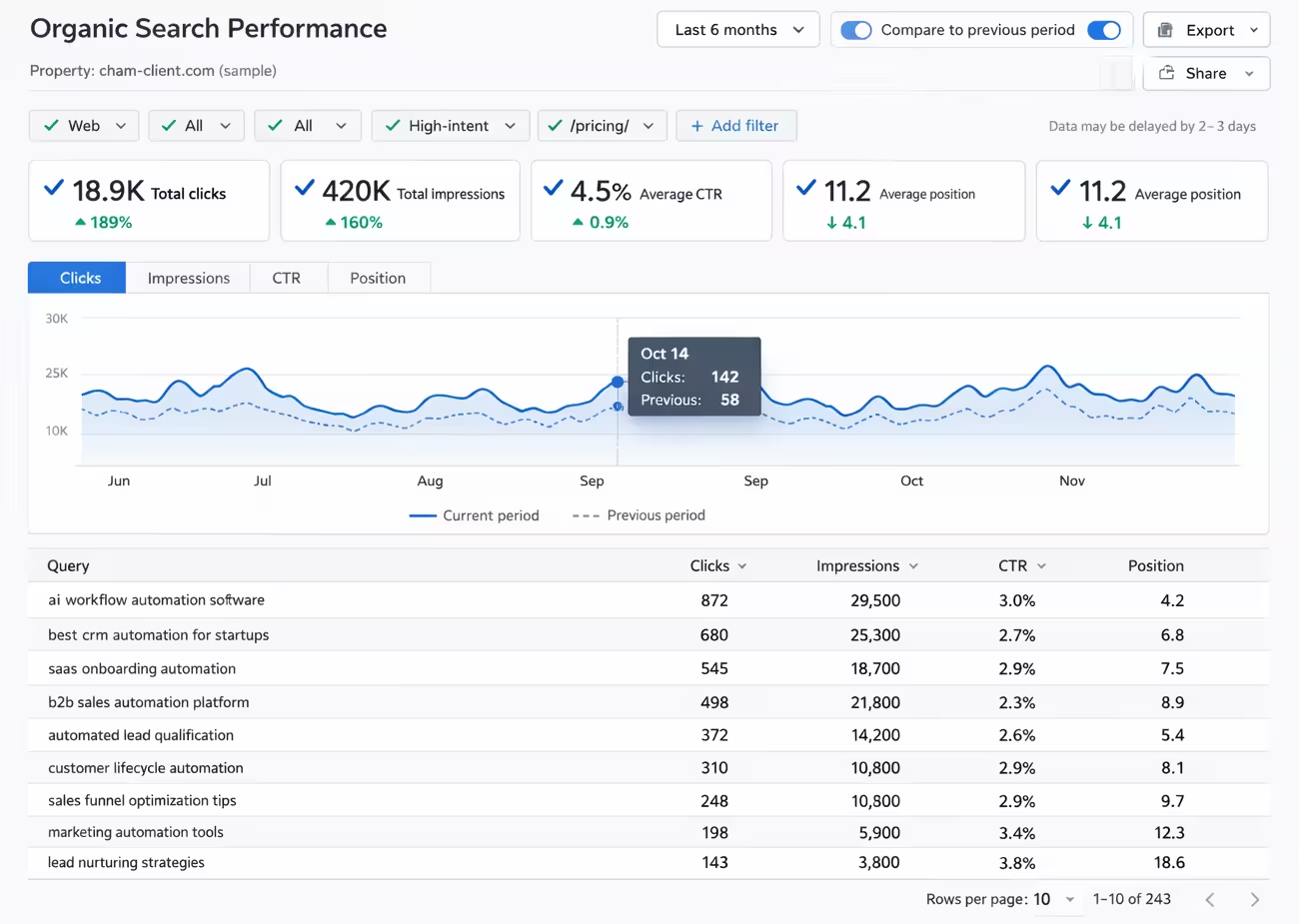
- Built a keyword map around high-intent search terms (problem-based and solution-based)
- Implemented on-page SEO, schema markup, and structured content templates for future articles
- Set up tracking: events, funnels, and core KPIs in analytics
Why it mattered
- Founders wanted to stop relying only on outbound and referrals
- SEO wasn’t about blog volume; it was about owning mission-critical search terms in their niche
How it solved key challenges
- Created a scalable, compounding acquisition channel
- Opened up a new source of warm, high-intent traffic that trusted them more by the time they arrived
Pillar 3 — Press Releases & Media Features (Credibility Layer)
What we did
- Developed a flagship press release to position the platform as a serious B2B solution
- Crafted media angles around: innovation, ROI, industry trends, and founder story
- Secured niche industry features and mentions (vertical SaaS publications, podcasts, blogs)
- Built a media section on the website as a permanent credibility asset
Why it mattered
- B2B teams are risk-averse; they want to see third-party validation
- Press and media coverage reduces the “Is this real?” friction in mid-market and enterprise deals
How it solved key challenges
- Gave the sales team instant authority assets to share with prospects
- Turned “new and unknown” into “up-and-coming and validated”
Pillar 4 — Product Explainer Video & Onboarding System
What we did
- Produced a 90-second product explainer video focused on problem → solution → outcome, not just features
- Created short micro-clips for onboarding emails, help center, and social
- Integrated the video into: homepage, pricing page, onboarding emails, and in-app help
Why it mattered
- Prospects didn’t have time for long demos just to understand the basics
- Clear visual explanation shortens time-to-understanding and reduces friction
How it solved key challenges
- Turned complex product messaging into a simple, visual story
- Freed sales calls from basic explanation and shifted them to strategy and fit
- Supported better self-serve onboarding and reduced confusion
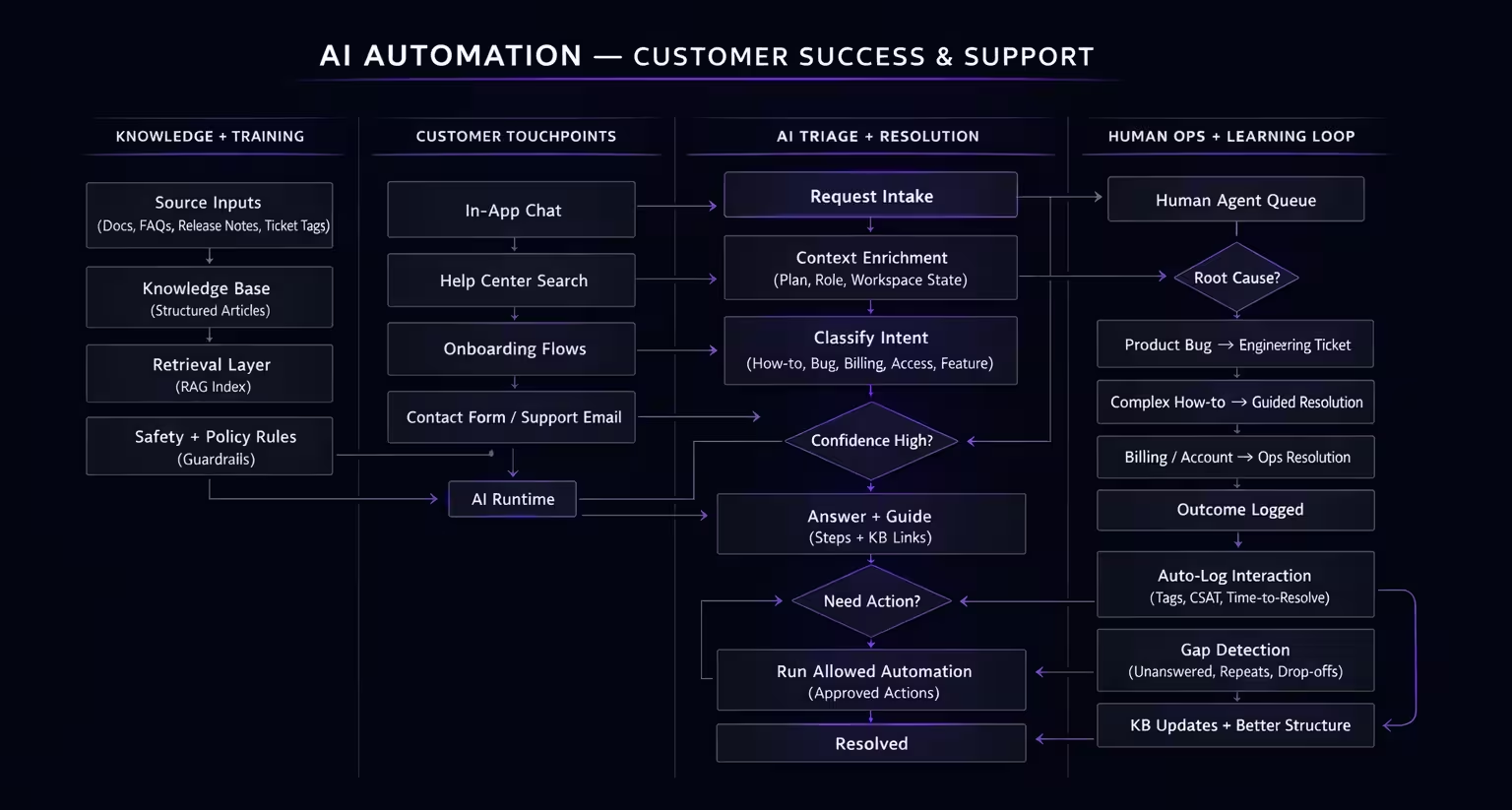
Pillar 5 — AI Automation for Customer Success & Support
What we did
- Mapped the entire support journey: pre-trial, onboarding, expansion
- Built a searchable knowledge base with simple, direct how-to content
- Deployed an AI-powered support assistant trained on documentation, FAQs, and product logic
- Integrated automation into key touchpoints: in-app chat, help center, onboarding flows
Why it mattered
- Support team was small and overloaded with repetitive questions
- Founders wanted scalability without scaling headcount at the same rate
How it solved key challenges
- Offloaded repetitive Tier 1 questions to automation
- Gave customers instant, accurate answers 24/7
- Freed the team to focus on complex issues and proactive success, not firefighting
Results
All metrics are from the first 4–6 months after launch, benchmarked against the previous period.
+210% increase in qualified demo bookings
From almost no qualified organic presence to consistent, targeted traffic on key problem keywords
3.4× growth in organic search traffic
From almost no qualified organic presence to consistent, targeted traffic on key problem keywords
+48% uplift in trial-to-paid conversion rate
Combination of explainer video, better onboarding flows, and clearer messaging reduced drop-off
37% reduction in repetitive support tickets
AI assistant and knowledge base absorbed the majority of simple “how do I…?” questions
First-page rankings for 5 core high-intent keywords
Put the brand in front of decision-makers who were already actively looking for solutions
9/10 average “clarity” score in user testing
Prospects reported that they quickly understood what the platform does and who it’s for
34% shorter sales cycle from first demo to close
Strong authority signals and clear explainer content reduced internal friction on the client side
9 industry media mentions and features
Created reusable credibility assets for sales, investors, and new hires
Outcome Summary
The consultant shifted from a referral-dependent practice to a repeatable, inbound-powered authority brand, with systems that support bigger deals and a smoother client journey.
Deliverables & Timeline
Strategic Deliverables
- Positioning & messaging framework for primary ICPs
- Website architecture, funnel mapping, and conversion strategy
- SEO keyword map, content structure, and technical optimization plan
- Customer success journey map and automation blueprint
Tangible Assets
- New high-conversion marketing website (core pages + blog/resource template)
- Full technical SEO implementation: on-page, schema, tracking setup
- Press & PR assets: 1 flagship press release, media kit, and article angles
- 90-second product explainer video + micro-clips for onboarding and social
- AI-powered support assistant integrated with knowledge base and in-app help
High-Level Timeline
- Weeks 0–2: Discovery, audits (UX, SEO, support), positioning & messaging
- Weeks 3–6: Website UX/UI design, copywriting, SEO setup, analytics planning
- Weeks 7–9: Website build, implementation, tracking, initial content & launch
- Weeks 10–12: PR launch, press release distribution, explainer video production and deployment
- Weeks 13–16: AI automation rollout, knowledge base expansion, optimization and reporting
This was not a one-off “website project”. It was a staged rollout of a compound growth system.
Why This Project Succeeded
- Authority wasn’t treated as a logo problem — it was treated as a system.
Website, SEO, PR, and onboarding weren’t separate activities. They were designed as one authority & trust engine. - We fixed clarity and onboarding before scaling acquisition.
Most teams want more traffic first. We made sure visitors understood and trusted the product before pushing more people into the funnel. - Automation was built from real customer pain, not guesswork.
The AI assistant and knowledge base weren’t generic. They were built from actual support logs, sales calls, and real “stuck points” in the customer journey. - Most agencies would have stopped at the website.
A better design alone wouldn’t solve the perception, onboarding, and support problems. The power came from layering PR, SEO, video, and AI into a single, coherent system.
What the Client Said & What We Learned
We didn’t just get a new website. We got a full authority engine. Prospects show up already educated, our sales calls are sharper, and our support inbox is finally under control. This work sped up our fundraising conversations and made us look like the company we’re building toward — not the small team we still are right now
VP Growth
Agency Insight
For B2B SaaS, authority, clarity, and automation must launch together. If you only fix the website, you still bleed trust. If you only chase traffic, you send people into confusion. If you delay automation, your support team becomes the bottleneck.
This project worked because all three were engineered as one system
Want This Level of Digital Authority?
We build end-to-end authority stacks for high-fee consultants, advisors, and expert firms.