
Scaling a National Retail Brand Through SEO, Conversion Design & Automation
- Client: Leading National Apparel E-commerce Brand
- Industry: E-commerce & Retail
- Problem: Low organic traffic & weak conversion
- Solution: SEO + conversion redesign + AI automation + review engine
- Result: Scalable revenue, stronger brand, lower cost per order
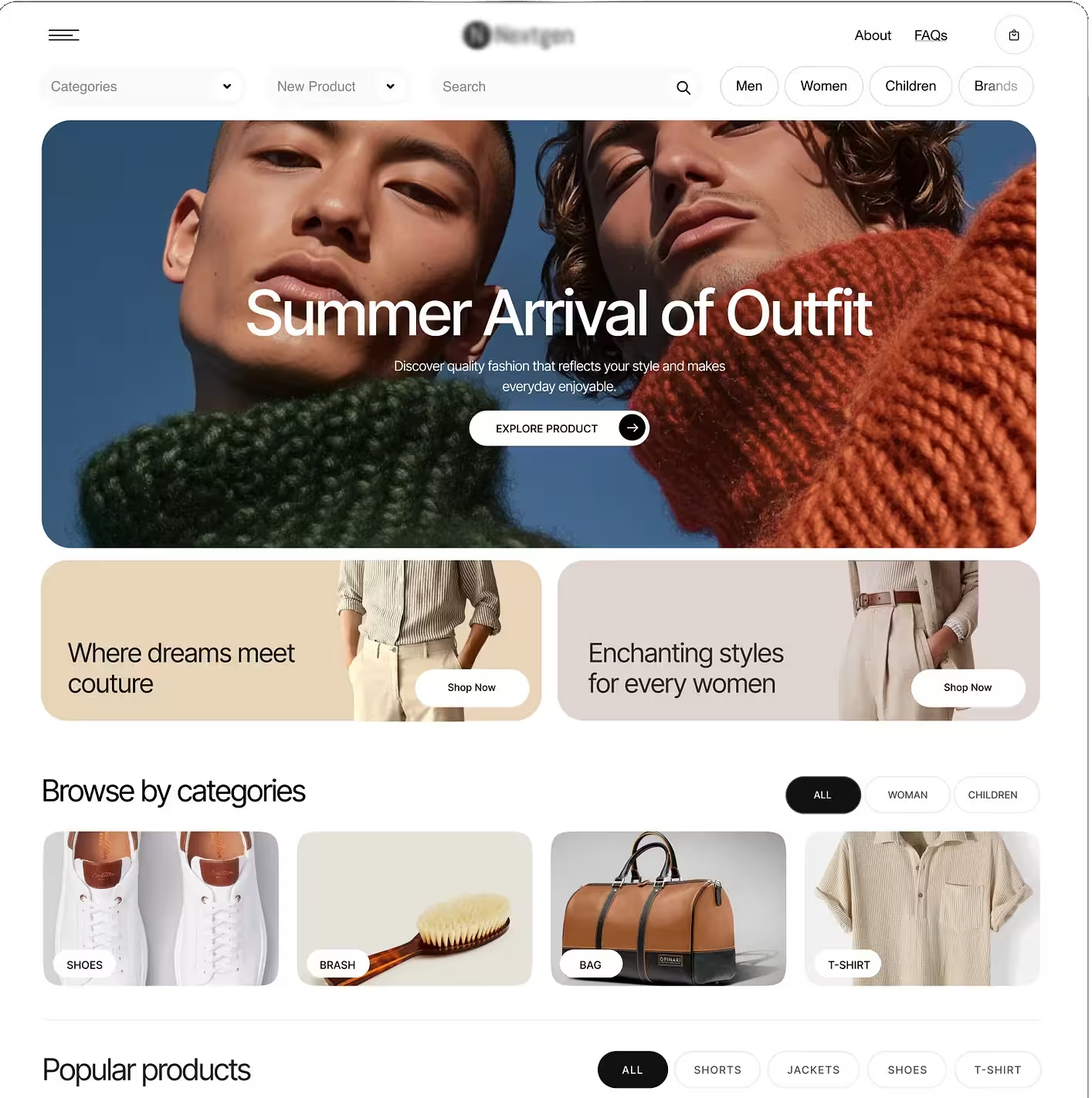
Core Problem
Strong brand and ad spend, but low organic visibility, underperforming website conversion, and an overloaded customer support team
Transformation
We turned a paid-ads-dependent fashion store into a search-driven, conversion-optimized, and support-light e-commerce machine
Services Delivered
Client Context
- National fashion retailer with 1000+ SKUs across casual, workwear, and seasonal collections
- Mid 7-figure annual revenue, heavily reliant on Meta & Google Ads
- Loyal repeat buyers, but brand underrepresented in search and media
- Internal team focused on merchandising and logistics—not digital growth strategy
Real-world pain: Like many e-commerce brands, they were stuck with low organic traffic, weak conversion, and expensive, manual support.
Core Challenges
- Paid-ads dependency: ~72% of revenue came from paid campaigns; ROAS was tightening as CPCs rose.
- Under-optimized store: Standard theme, slow mobile performance, confusing navigation, and weak product page structure.
- Poor search authority: Fragmented category structure, thin content, almost no backlinks from real publications.
- Support overload: Repetitive “Where is my order?” and sizing questions flooded support, increasing cost per order.
- Low visible trust: Limited recent reviews, no structured review system, and almost no PR or authority placements online.
The brand wasn’t broken—but it was capped. Scaling ad spend just increased risk and volatility without solving the structural issues
Strategy & Solution
We built one integrated growth system around SEO, conversion design, automation, and authority—not a collection of isolated tactics.
Pillar 1: Conversion-First E-commerce Revamp
What we did
- Rebuilt the e-commerce website with clean IA (information architecture), clear category hierarchies, and simplified navigation.
- Redesigned product pages with above-the-fold clarity: key benefits, price, size guide, shipping/returns, and reviews.
- Optimized checkout flow: fewer steps, guest checkout, clear trust signals, and mobile-first layout.
Why it mattered
- Visitors were landing on pages that looked generic and required “effort” to understand.
- Small UX friction points were silently killing conversion and increasing support tickets.
How it solved key challenges
- Increased conversion rate and add-to-cart rate, making every click (paid or organic) more profitable.
Reduced pre-purchase confusion by making information obvious, not hidden
Pillar 2: Technical SEO & Search Authority
What we did
- Conducted a full technical SEO audit and fixed crawl issues, canonicalization, duplicate content, and slow pages.
- Rebuilt category and filter structure to map to actual search demand (by category, occasion, fabric, and gender).
- Launched a content and link-building program: long-form guides (e.g., “How to build a capsule wardrobe”), seasonal landing pages, and links from relevant lifestyle and fashion publications.
Why it mattered
- The brand was invisible for many high-intent queries (e.g., “[category] + country”, “[style] for [occasion]”).
- Technical issues prevented Google from fully understanding and trusting the site.
How it solved key challenges
- Drove consistent organic traffic that doesn’t shut off when ad spend pauses.
- Built search authority, positioning the brand as a category leader rather than “just another store”.
Pillar 3: Product Demo & Experience Videos
What we did
- Produced short product demo videos showcasing fit, movement, and fabric detail for key SKUs.
- Created lifestyle clips for collection pages that reinforce brand positioning and answer “Is this for people like me?”.
- Integrated videos directly into product pages and used them in remarketing creatives.
Why it mattered
- Apparel is tactile. Photos alone leave doubts about fit, quality, and real-life look.
- Better visual context reduces returns and pre-purchase questions.
How it solved key challenges
- Increased time on page and engagement, leading to higher add-to-cart and conversion rates.
Reduced “Does this fit like…?” and “What does this look like in real life?” support tickets
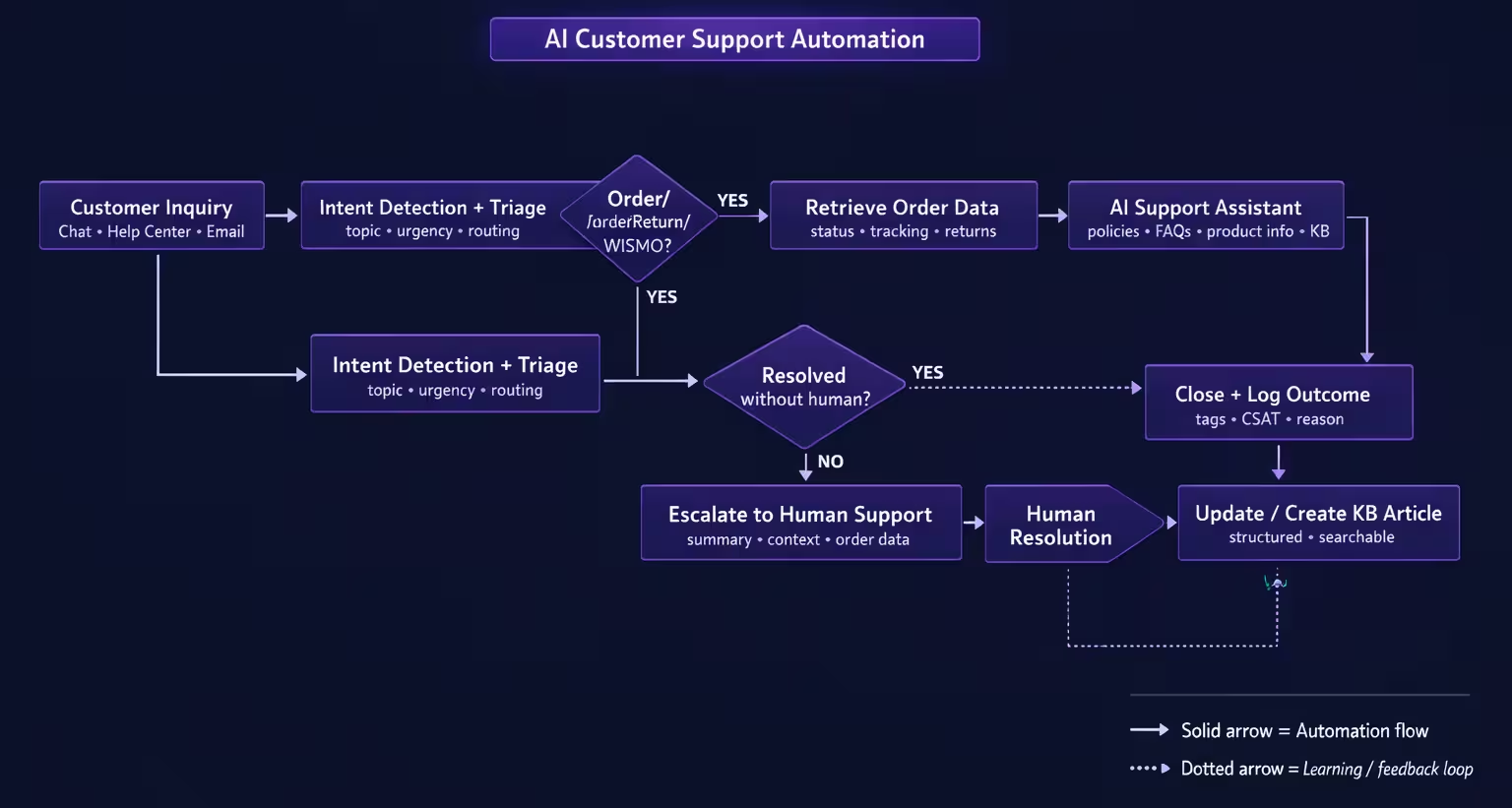
Pillar 4: AI Customer Support & Knowledge Base Automation
What we did
- Built an AI-powered support assistant trained on policies, FAQs, size charts, shipping details, and product information.
- Implemented a structured knowledge base and help center with clear, searchable articles.
- Connected automation to order data to handle basic inquiries (“Where is my order?”, return status, etc.) without human intervention.
Why it mattered
- Support was a recurring cost center, dealing with the same questions repeatedly.
- Slow responses hurt customer trust and repeat purchase behavior.
How it solved key challenges
- Cut repetitive tickets and first-response times dramatically.
Freed the human support team to handle high-value issues instead of copy-pasting answers
Pillar 5: Review Engine, PR & Authority Positioning
What we did
- Set up an automated review generation system triggered post-purchase, with frictionless review flows and incentives.
- Distributed press releases around seasonal collections and sustainability initiatives.
- Secured featured articles and mentions on relevant lifestyle blogs and online magazines.
- Worked on brand knowledge & entity signals to strengthen brand recognition in search.
Why it mattered
- Apparel is heavily trust-based. Buyers look for social proof and credible third-party validation.
- Google also favors brands with strong entity-level authority and consistent brand signals.
How it solved key challenges
- Flooded key products and the brand overall with fresh, real reviews.
- Made the brand look (and feel) like a leading national player, not an anonymous store.
Supported both SEO authority and conversion, closing the loop
Results
All metrics below compare the 8-month post-engagement period to the 8 months prior
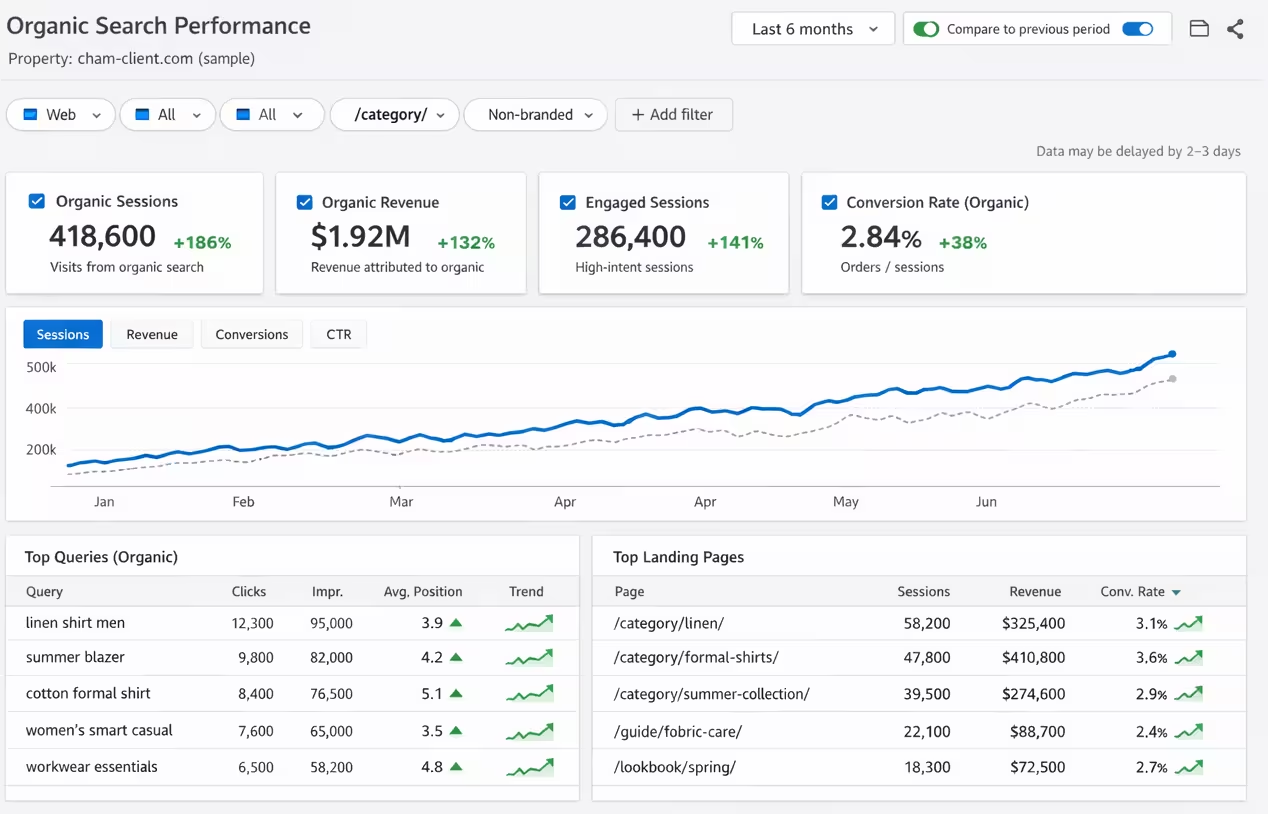
+186% organic search sessions
Organic went from a “nice extra” to a major revenue pillar
+132% revenue from organic search
Organic went from a “nice extra” to a major revenue pillar
Conversion rate: 1.9% → 2.8% (+47%)
Direct impact of conversion-focused redesign and product storytelling
Add-to-cart rate: +35%
Clearer value, better size guidance, and product demo videos increased buying intent
Average order value: +18%
Strategic cross-sells and clearer bundles lifted order size
Blended customer acquisition cost: –24%
More organic sales + higher conversion improved overall unit economics
Support tickets per 1,000 orders: 410 → 242 (–41%)
AI assistant + knowledge base absorbed repetitive questions
First-response time: 11 minutes → 45 seconds (median)
Automated frontline support ensured instant answers for common inquiries
Outcome Summary
The consultant shifted from a referral-dependent practice to a repeatable, inbound-powered authority brand, with systems that support bigger deals and a smoother client journey.
Deliverables & Timeline
Strategic Deliverables
- E-commerce growth roadmap (SEO + CRO + automation + authority)
- Technical SEO audit & implementation plan
- Content and link-building strategy for priority categories
- Customer support automation and knowledge architecture blueprint
Tangible Assets
- New high-conversion e-commerce website (design & development)
- Optimized product and category page templates
- Product demo & lifestyle videos for priority SKUs and collections
- AI support assistant + integrated help center / knowledge base
- Review generation flows and automation sequences
- Press releases, featured articles, and media placements
High-Level Timeline
- Month 0–1: Discovery, analytics review, technical audits, UX & IA strategy
- Month 2–3: Website revamp (design & dev), core technical SEO fixes, knowledge base structure
- Month 4–6: Content and link-building rollout, video production integration, AI assistant launch
- Month 7–8: Review engine optimization, PR pushes, refinement based on performance data
Why This Project Succeeded
-
- We treated the store as a system, not a website.
Most agencies either “do SEO,” “redesign the website,” or “install a chatbot.” We aligned traffic, conversion, support, and brand authority into one growth engine with shared KPIs. - Conversion was the non-negotiable center.
Every change—SEO, design, videos, automation—was evaluated against one question:
“Does this make it easier and safer for a visitor to buy?”
- Automation was used to reduce cost, not just to look modern.
The AI assistant wasn’t a gimmick. It was trained on real customer language and real policy data, directly cutting repetitive workload and improving buyer experience. - Authority and trust were built deliberately, not accidentally.
Reviews, PR, and brand mentions weren’t an afterthought. They were engineered to support both search algorithms and human confidence.
- We treated the store as a system, not a website.
What the Client Said & What We Learned
We thought we had a ‘marketing problem.’ What your team showed us is that we had a growth system problem.
Our store now runs on a completely different level—organic is finally working, our support team isn’t drowning, and we’re not terrified every time ad costs go upCMO
Agency Insight
The biggest unlocked lever wasn’t a single tactic; it was replacing channel-first thinking with system-first thinking. Once the website, SEO, automation, and authority assets were aligned around conversion, the numbers followed
Want This Level of Digital Authority?
We build end-to-end authority stacks for high-fee consultants, advisors, and expert firms.